Hero image: AI-generated illustration of a home exterior; not a documented EmberShield project.
A practical way to weigh wildfire resistance, everyday maintenance, and your next home improvement project.
Home hardening can offer benefits you notice long before a wildfire: less refinishing, more durable exterior materials, and, with the right specifications, better energy performance. Those benefits depend on what you replace and how the new system is designed. They are reasons to compare upgrades carefully, rather than assume every fire-resistant product will lower your bills.
At EmberShield Home Hardening, property assessment comes before the installation plan. That approach helps connect the places your home is vulnerable with improvements that fit its condition and your priorities.
What the Headwaters research actually shows
In August 2026, Headwaters Economics and Insurance for Good published an evidence review of the additional benefits of wildfire-resistant homes. It examined energy use, upkeep, and material lifespan across common retrofits. This was a synthesis of existing research and technical and industry sources, not a trial showing what every homeowner will save.
The useful takeaway is that a wildfire upgrade can solve more than one problem. The important qualification is that its value depends on the original material, climate, installation, and continued maintenance. The review did not establish better insurance terms or higher property values.
Where everyday benefits may show up
Less work maintaining exposed materials
Replacing a weathered wood component with an appropriate noncombustible alternative may reduce sanding, staining, or repairs. The Headwaters documentation identifies examples involving siding, exterior doors, railings, and some vents. But the comparison matters: replacing a material that already needs little upkeep may produce little additional maintenance benefit.
Ask for the maintenance instructions with every proposal. Find out what needs cleaning, how finishes should be inspected, and whether replacement parts will remain accessible. “Lower maintenance” should describe a realistic care schedule, not suggest that the exterior can be ignored.
Energy performance designed into the project
A roof replacement is an opportunity to consider both its fire performance and its thermal performance. The U.S. Department of Energy’s consumer guide to cool roofs explains that reflective roofing can reduce cooling demand in suitable climates, while potentially increasing winter heating needs. Roof color, insulation, and the local climate all affect the tradeoff.
Windows deserve the same two-part review. CAL FIRE recommends multipane windows with at least one tempered pane for wildfire resistance. Separately, the Department of Energy’s window technology guidance explains how glazing, frames, and other features affect energy performance. A tempered pane is not an energy-efficiency rating. Ask the installer to document both sets of requirements.
A longer useful life for the right replacement
A component that tolerates weather better may need replacing less often. Headwaters identifies potential lifespan benefits for several material changes, but its broad estimates are not warranties for a particular product. Exposure, workmanship, and maintenance still matter.
For a project you are already planning, compare the installed cost, written warranty, upkeep, and expected replacement needs. Keep any estimated energy savings separate so the same benefit is not counted twice.
How to choose the next project
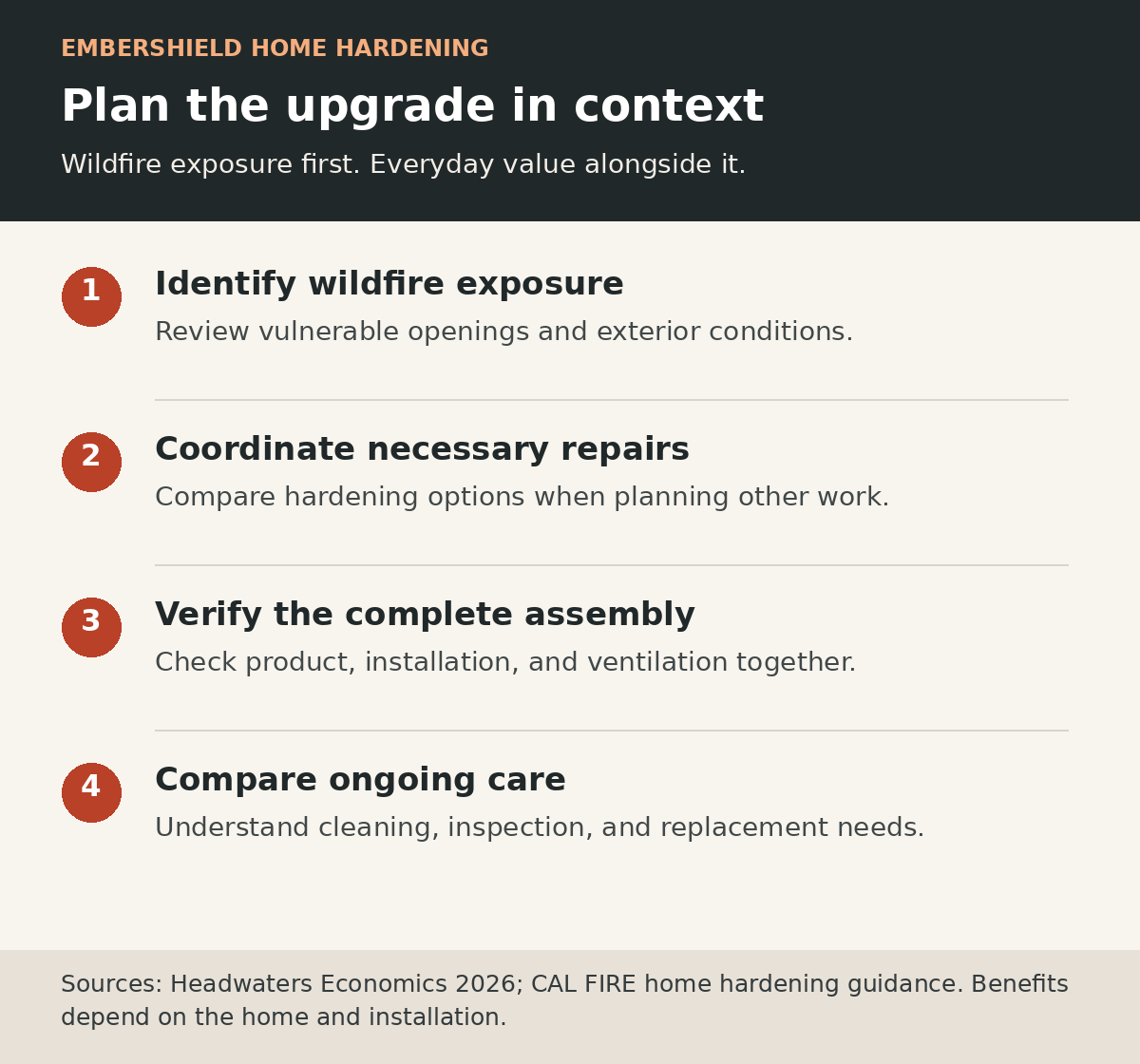
Use this sequence to organize a conversation with your inspector or contractor. It is a planning aid, not a substitute for evaluating the property.
- Identify the exposure. Start with the places embers, flames, or heat could threaten the structure. Consult EmberShield’s wildfire preparation checklist before your assessment.
- List work already coming due. Include aging roofing, damaged vents, failing finishes, and planned window or exterior renovations. An existing repair can be a useful time to compare wildfire-resistant options.
- Check the whole assembly. Ask how the proposed component connects to adjacent materials, how it will be installed, and what documentation supports its use.
- Compare ongoing care. Request a written scope that separates risk-reduction work from optional efficiency features and cosmetic choices.
Why vents need particular care
A vent is an opening that must perform two jobs: support required ventilation and resist the exposure it was selected for. CAL FIRE’s home hardening guidance recommends approved flame- and ember-resistant vents and warns that vent modifications can reduce airflow. It advises checking ventilation requirements with the local building official and using a licensed contractor.
This is why covering openings indiscriminately is not a sound upgrade plan. Vent selection belongs in the assessment of the attic or underfloor system. Keep the current product instructions and installation record with your home’s maintenance documents.
How EmberShield helps you turn research into a plan
EmberShield’s published process moves from inspection to property evaluation, a personalized plan, and installation. Our services include wildfire risk assessment, exterior hardening, ember screen installation, gutter protection, and defensible space planning.
Before an assessment, gather any existing inspection reports and make a short list of repairs or renovations you expect to undertake. Share access limitations and budget priorities. Ask which vulnerabilities need attention first and which optional upgrades can be coordinated with later work.
This approach suits homeowners who want help evaluating the property and managing installation. If you only need a replacement component, have its exact application and specifications confirmed before purchasing. Neither a product purchase nor a completed project makes a home fireproof; preparedness and evacuation planning remain essential.
Frequently asked questions
Will every wildfire-resistant upgrade lower my energy bill?
No. Energy performance depends on the assembly, climate, and existing condition. The Headwaters documentation includes upgrades with no energy benefit and some with potential tradeoffs. Ask for a property-specific basis for any savings estimate.
Should I wait until the roof or windows need replacing?
Use scheduled replacements as an opportunity, but do not make a future renovation the reason to overlook current vulnerabilities. An assessment can help separate immediate work from longer-term improvements.
Are low-maintenance materials maintenance-free?
No. Inspection, debris removal, and the manufacturer’s care requirements still apply. Easier upkeep can make the routine more manageable; it does not remove the need for it.
Does this research guarantee an insurance discount?
No. The review excluded insurance terms because published evidence was limited. Ask your insurer directly what documentation it accepts and whether any program applies to your property.
Plan an upgrade that fits your home
Request an EmberShield home assessment and bring your repair list. We can help identify wildfire vulnerabilities and discuss how home hardening fits the improvements you are already considering.